
The Legacy of the Registered Maine Guide
THE PATCH MAY BE SMALL, BUT THE RESPONSIBILITY BEHIND IT IS ENORMOUS
–Michael Tuminaro, Deputy Director
Guides are a mixture of woodsman, medic, risk-manager, entertainer and facilitator. They will keep you on the legal side of fish and game law and recommend appropriate gear for the conditions you’ll be encountering. They pay attention to the little details and needs of their clients. The best guides are the ones who make you feel like you’re a friend even before you meet them. They greet you with a warm smile and immediately make you feel comfortable and welcome in their camp. You can tell they’re happy to have you and share their season with you. They’re anxious to show you a productive and safe time in Maine’s wild places, as well as provide good meals and dynamic conversations by the evening’s fire.
For more than a century, Registered Maine Guides have stood as symbols of wilderness knowledge and self-reliance. They have been stewards of Maine’s woods and waters.
Since Maine first began licensing guides in 1897, the patch of the Registered Maine Guide has become one of the most respected outdoor credentials in North America. The first licensed guide was the legendary Cornelia Thurza Crosby from Phillips, better known as “Fly Rod,” whose writing and outdoor adventures helped introduce Maine’s wild places to the nation.
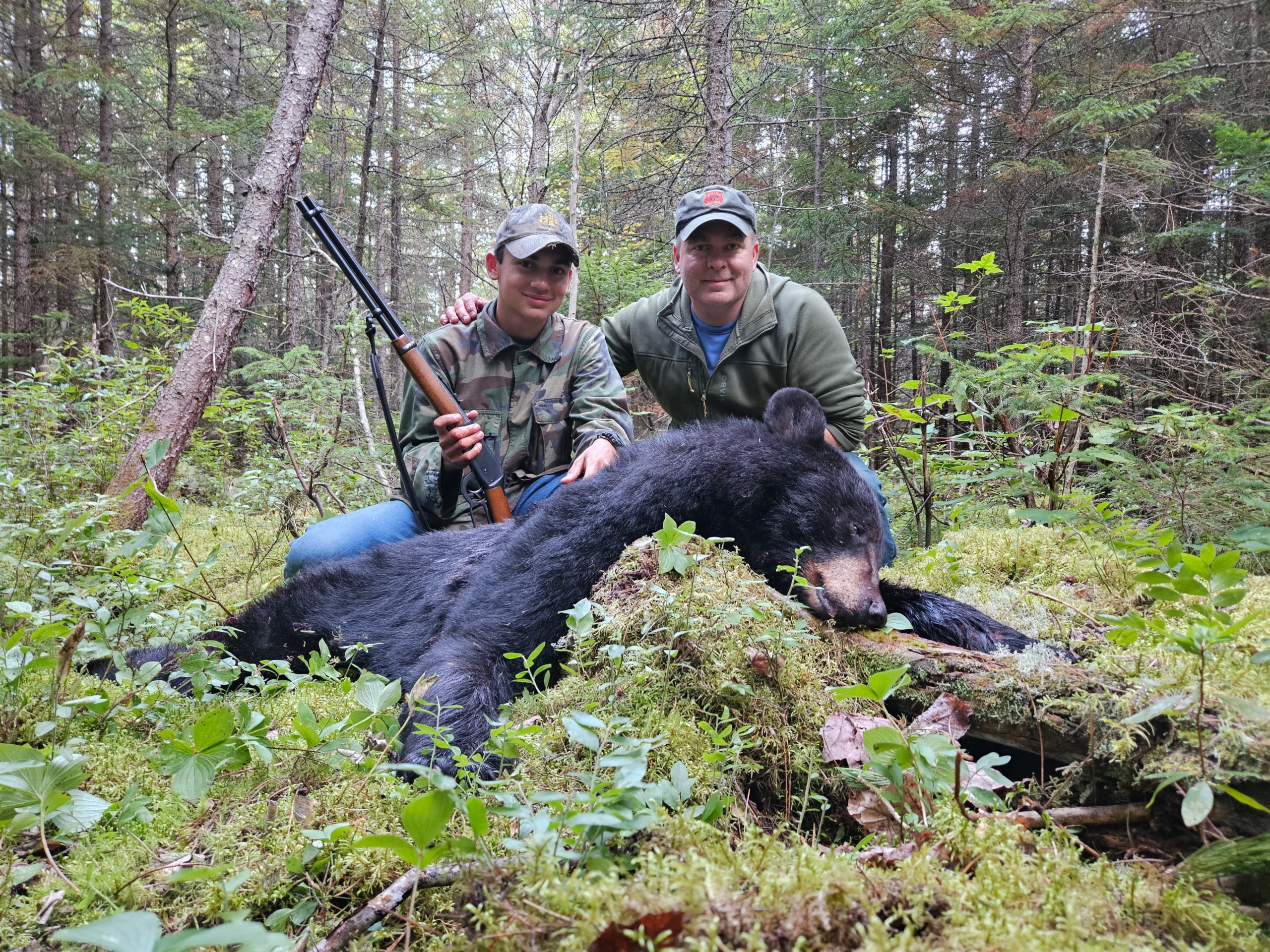
Today, Registered Maine Guides continue that tradition across the state’s forests, rivers, lakes, and coastlines. Whether leading a moose hunt in Jackman, helping a child catch their first brook trout on the Magalloway, or introducing visitors to remote Allagash canoe trips, guides serve as spokespersons for Maine’s outdoor heritage.
Becoming a Registered Maine Guide is no easy task. Candidates must demonstrate to the IF&W board their proficiency in navigation, catastrophic response, first aid, and outdoor ethics through written and oral examinations. In fact, Maine’s guide licensing system is widely regarded as one of the most rigorous examinations for outdoor professionals in the entire country.
The guide patch represents more than just passing the state’s testing process. It signifies a commitment to client care and safety, the conservation of Maine’s natural resources, and professional conduct afield. Clients hire guides not only for their ability to find game, mountaintop vistas or the best route to take down the river, but also for their ability to make sound decisions when conditions change and challenges…sometimes life threatening ones…arise.
Why would you need a guide in the modern era dominated by GPS units, smartphones, and online maps? In my opinion, the value of a professional guide remains as relevant as ever. Technology can provide some valuable information, but it cannot replace the experience earned through thousands of days in the field. A guide has already put in the sweat equity and knows where the game will be. A guide understands weather patterns, animal behavior, watercraft and all the subtle details of the woods and waters that transform an outing into a truly memorable adventure.
The future of guiding in Maine appears to be bright as outdoor tourism continues to play a strong role in the state’s economy. New generations of guides continue to enter the profession. These new guides bring fresh perspectives…but also understand the importance of preserving time-tested outdoor skills. Women, veterans, educators, and outdoor enthusiasts from diverse backgrounds are taking on the challenge of earning their guide’s license and carrying the traditions forward.
Becoming a guide in Maine remains more than just a a license or a bright red patch. It is a promise to lead safe excursions, ethical hunting and fishing trips and to educate clients to make sure that our natural resources are utilized in a sustainable way.
As long as Maine’s wild places exist to explore and adventures await beyond the next bend in the trail, the Registered Maine Guide will continue to lead way.
Michael Tuminaro is a Registered Maine Guide and entrepreneur dedicated to preserving and promoting Maine’s sporting heritage. He is the owner of Maine Upland Guide Service, the Deputy Director for the Maine Professional Guides Association, and a board member at the Sportsman’s Alliance of Maine.